09
The decision framework
The ownership structure to settle first. Building your team, and the ten questions to ask before signing anything. The independence test, applied transparently.
The UBS Global Family Office Report 2025 is the most comprehensive survey of how the world’s largest private wealth holders allocate capital. Across 80 pages and 317 family offices (average AUM USD 1.1 billion, average family net worth USD 2.7 billion), yachts do not appear. Not in any year, not in any region, not in any sub-allocation. The 2026 edition, covering 307 family offices, does not mention them either. The asset that sits in the harbour outside the principal’s office is not in the books the family office prepares for the principal.
Which is not, as one might first read it, an oversight. It is the structural reality of how superyachts are bought, and the reason the discipline of doing so well is harder to learn than the family office’s other allocations.
This chapter is the closing argument: the ownership structure to settle first, how to build the team that protects you and in what order, how to test any adviser you are considering (including us), and why the moment you are reading this is the moment that matters.
The largest wealth transfer in history
Capgemini’s World Wealth Report 2025 (29th edition) finds USD 83.5 trillion of wealth will be inherited by Gen X, millennials, and Gen Z by 2048. 81 percent of next-generation HNWIs intend to switch from their parents’ wealth management firm within one to two years of inheritance.
The reader of The First Owner’s Reference is therefore typically one of two profiles: a newly liquidated principal sitting on USD 20 to 500 million considering a first yacht acquisition, or an heir whose first action upon inheritance is to evaluate the advisers their parents used. Both share an essential characteristic: they are entering an asset class they have no prior experience of, at a moment when the advisers around them are conflicted by their position.
The Knight Frank Family Office Survey 2026 (drawn from more than 40 family offices in London, New York, Dubai, Singapore, Hong Kong) explicitly names superyachts in the portfolio architecture for the first time:
Digital aggregation, enabling live, consolidated tracking of complex portfolios, from liquid assets to superyachts and real estate.
Family offices are now working to integrate yachts into the portfolio frame, although the tooling is still being built. The structural matter is not really one of technology. It is that the industry selling these assets has limited incentive to make their financial behaviour transparent to a family office applying full fiduciary scrutiny, and tooling can only do so much against that.
The structure comes first
Before testing any adviser, the reader has to understand what is being built. The ownership structure is the frame the yacht will sit inside: personal ownership, a company, or something more layered, together with the jurisdiction it occupies and the VAT position that rides on it. It is among the first decisions an owner makes, among the hardest to unwind, and the one most often left too late; settling it early, and around the owner rather than the transaction’s timetable, is among the first things an independent adviser is engaged to ensure. We put it to Simon Roberts of Quadrant Group, which has built these structures from the Isle of Man for forty years; his answers, on jurisdiction, VAT, private against commercial use, the annual cost, and the decision hardest to reverse, are in the interview that closes this chapter.
The structure should be built around the owner’s objectives, rather than the other way around.
A yacht is rarely the principal’s only significant asset, and its ownership structure should not be designed as though it were. The vehicle that holds the yacht sits alongside the family’s operating companies, property, trusts, and succession arrangements, and the sound version of the decision reads across all of them at once. Residency and tax position are shared inputs; a jurisdiction that suits the yacht in isolation can work against the structure the family already runs elsewhere, or complicate the estate the next generation inherits. It is the point the family-office material makes from the other side: the yacht belongs inside the portfolio frame, not beside it.
So the yacht’s asset management is properly a joined-up affair, planned with the principal’s wider wealth rather than bolted on next to it. The jurisdiction question is then answered last rather than first, falling out of those wider circumstances rather than leading them, which is why there is no single right answer to carry from one owner to the next.
For first-time owners, the key is not to ask, “Which jurisdiction is best?” but rather, “Which jurisdiction is best for my circumstances?”
The independence test
Several firms describe themselves as independent. The word does meaningful work in some cases and is decorative in others. The independence test has six elements. It applies to any adviser, including the publisher of The First Owner’s Reference; the publisher’s own answers are on the colophon.
1. Does the firm earn anything contingent on a transaction closing? If yes, they are not independent of the deal. Brokers, charter brokers, management companies that receive yard referral fees, and design firms taking commission on builder selection all fail this test. They may still provide value, but not independence.
2. Does the firm hold any equity, employment, or referral relationship with any yard, broker, supplier, management company, or charter operation? If yes, they are not independent of those counterparties. A management company owned by a brokerage is not independent of that brokerage’s recommendations.
3. Does the firm publish a complete counterparty list for the past three years, with the nature of each relationship? If no, the reader cannot test claims one and two; the independence claim becomes assertion rather than evidence.
4. Are the firm’s fees transparent and quoted in writing in advance? If no, the structure can hide commissions. Hourly without a cap, or percentage without a clear scope, has the latitude to extract value the buyer cannot price.
5. Does the firm hold professional indemnity insurance at a level appropriate to the transaction? If no, the firm cannot afford to be wrong on the buyer’s behalf. A USD 50 million build with an adviser carrying GBP 1 million PI is not insured against the actual scale.
6. Are the firm’s principals named, traceable, and accountable? If no, none of the above can be verified. Anonymous firms, firms registered in jurisdictions without beneficial-ownership disclosure, firms whose principals do not appear in public communications, fail the most basic accountability test.
These six questions apply to anyone proposing to advise, and serve as the rough framework for due diligence on a wealth manager, a lawyer, a surveyor, or a captain candidate. The principles are fiduciary alignment applied to an industry that has long avoided them; they are not yacht-specific.
The suitability test
This is a separate test from the independence test. Where the independence test asks whether a firm is aligned with the buyer, the suitability test asks whether the firm is the right fit for this engagement. A firm can pass the independence test and still be the wrong choice for a given project. Six elements.
1. Comparable track record. Has the firm delivered projects in the same size band, the same yard tier, and the same regime (new build, refit, brokerage acquisition; sail or motor; semi-custom or fully custom) as the engagement in question? A firm with deep refit experience on 50 metre motor yachts is not, by default, the right firm for a 70 metre custom sailing yacht new build. Ask for three named examples in the comparable band.
2. Team breadth against the project’s actual needs. Does the firm carry, in-house or in retained relationships, the specialist disciplines the project will require: maritime counsel introduction, paint surveying, vibration and acoustic engineering, mechanical and propulsion review, electrical compliance, refund-guarantee credit assessment, and post-delivery warranty management? A representative who has to subcontract every specialism is more expensive and slower than one who carries the disciplines.
3. Bandwidth. How many concurrent projects is the firm running, how many will the named principals personally lead, and what proportion of the work passes to junior staff? Ask for the principal’s expected on-site days per month and the project manager’s expected on-site days per week, in writing.
4. Geographic presence. Where is the firm based relative to the yard, the surveyor’s likely ports, and the owner’s preferred operating area? A representative based two flights from the yard, on a build that demands weekly site presence, will either spend the budget on travel or fail the discipline. Ask about office or partner presence in the relevant geographies.
5. Discipline test. Has the firm walked away from engagements where the right advice was for the client not to proceed, or where the proposed structure failed independence or suitability review? A firm that cannot point to engagements declined or terminated has not been tested. The willingness to walk is the truest signal of fiduciary alignment.
6. Reference depth. Will the firm provide named references, including at least one engagement that did not land cleanly? The reference list of triumphs is universal. The reference list that includes a project where things ran hot, and what the firm did about it, is the test. A firm that cannot produce one has either not been busy long enough, or has not been honest about what busy means.
A representative who answers these six questions clearly, with documentary evidence, is suited to the engagement they are being considered for. A representative who cannot is not necessarily a poor firm; they may be the right firm for a different project. Suitability is project-specific.
The willingness to walk is the truest signal of fiduciary alignment.
The independence test and the suitability test are applied together. A firm that passes both is the firm to engage. A separate filter is the Yacht Owner’s Representative Register, the cross-industry register of vetted representatives administered by the Superyacht Alliance for Professional Standards. The publisher of The First Owner’s Reference offers both tests for application to itself alongside any other firm a reader is considering.
Building the team, in priority order
The order in which the buyer hires the team determines the quality of every subsequent decision. Most first-time buyers hire in the wrong order. The right order:
1. Independent adviser. Engaged before any broker, any captain, any management company. The independent adviser’s role is to scope the acquisition, evaluate brokers, support the negotiation, and build the rest of the team.
2. Yacht lawyer. Specialist shipbuilding and yacht counsel from a recognised firm (Hill Dickinson, Watson Farley & Williams, Ince, Stephenson Harwood, Reed Smith, HFW, Norton Rose Fulbright). Engaged before any contract is reviewed. The independent adviser will introduce candidates without conflict.
3. Surveyor. Engaged on a per-deal basis once a shortlist exists. Independent of the broker. Recognised firms include Ward & McKenzie and Patton Marine. The surveyor’s report is paid for by the buyer.
4. Captain candidate (or build captain on new build). Hired through routes independent of the broker. Interviewed at length. The captain should be involved in survey, sea trial, and acceptance decisions.
5. Yacht management company. Engaged once the acquisition decision is taken. Independent of the broker. The management company is the long-running operational partner.
6. Insurance broker. Engaged once flag state and operating profile are determined. Pantaenius, AON, Gallagher all quote competitively.
Total team cost on a USD 30 to 50 million acquisition runs USD 200,000 to 600,000 across the first year, a rounding error on a transaction of that size. Owners who economise here save tenths of a percentage point and lose multiples in the asset itself.
The right order is independent adviser, then lawyer, then surveyor, then captain. Most first-time buyers do this in reverse.
The ten questions
A one-page checklist the reader can apply before signing anything.
1. Who introduced the yacht (or yard) to me, and who pays them?
2. Who recommended the lawyer, and who pays them?
3. Who recommended the surveyor, and who pays them?
4. Who recommended the management company, and who pays them?
5. Has any party offered to provide their services “at no cost,” and if so, who is paying them?
6. Has every party I am working with disclosed their commercial relationships in writing, including referral fees, retrocessions, and equity holdings in counterparties?
7. Is my legal counsel independent of the broker, the yard, and the management company, and is their fee paid by me directly?
8. Is my surveyor independent of the seller and of the broker, and is their fee paid by me directly?
9. If I am building, is my owner’s representative paid solely by me, with no contingent fee, no yard commission, and no referral relationship?
10. If I asked any of these parties to walk away from a deal that would not benefit me, would they?
A buyer who can answer all ten questions clearly, with documentary evidence, is exceptionally well-protected. The buyer who cannot is, by industry default, operating in the structure described across the earlier chapters. That is information rather than judgment.
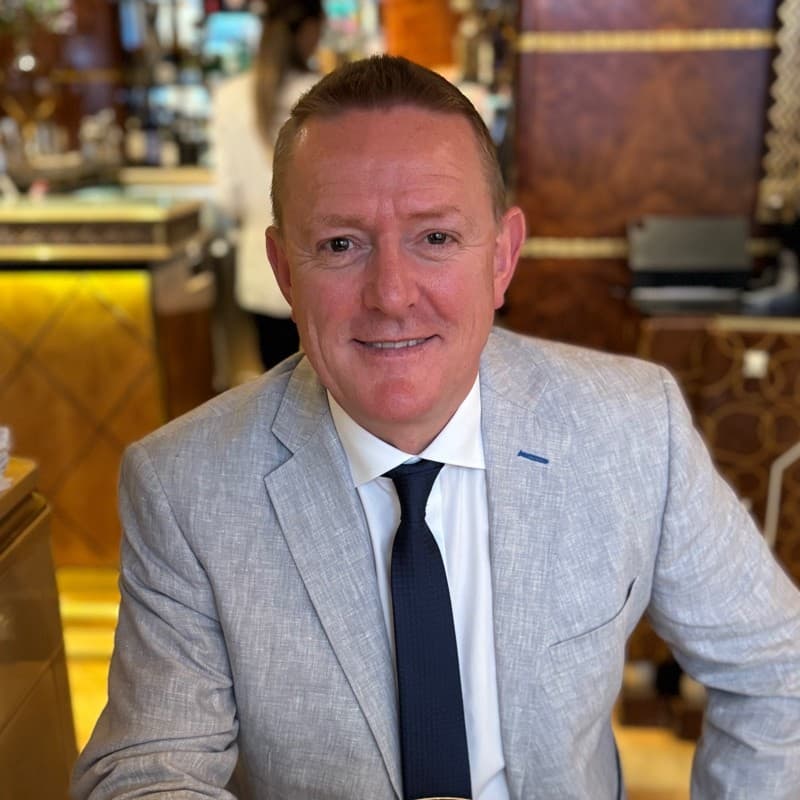
Quadrant Group has advised marine clients on ownership structures from the Isle of Man for forty years. It provides the services discussed in this chapter, so the independence test set out in the essay above applies to it as to any firm. We put seven questions to Simon Roberts of Quadrant on the ownership-structure decision, jurisdiction, VAT and importation, private against commercial use, the running cost of the structure, the independence test applied to his own firm, and the decision hardest to reverse. His answers are published as given, lightly edited for length and clarity and house style.
The biggest mistakes are not usually caused by choosing the wrong structure. They are caused because the right questions were not asked early enough.
The ownership-structure decision: personal ownership, a company, or a more layered arrangement. For a first-time buyer at 30 to 50 metres, what actually drives that choice, and what do buyers most often get wrong by leaving it too late?
How does jurisdiction influence an ownership structure, and why is there rarely a one-size-fits-all solution?
VAT and importation sit on top of the ownership structure. Walk a first-time buyer through where the structure and the VAT position have to be decided together, and the cost of getting the sequence wrong.
From considering ownership to signing a contract
The reader profile on the published record. The independence test in six elements. The team, in the order that matters, and what it costs. And the broad ownership models the early conversations resolve into.
The reader profile, on the published record
- Global UHNWIs (above USD 30 m), 2026
713,626
- Five-year change
Up 162,191 (89 individuals per day)
- United States share, 2026
35 percent
- United States share, 2031 forecast
41 percent
- Wealth transferred to next generation by 2048
USD 83.5 trn
- Next-gen HNWIs who switch wealth manager within 1 to 2 years of inheritance
81 percent
- Yacht references in UBS Global Family Office Reports 2025 and 2026
Zero, across 80 pages and 317 family offices
The independence test, six elements
| Question | Pass | Fail |
|---|---|---|
| Earn anything contingent on transaction closing? | No | Yes |
| Equity, employment, or referral relationship with yards, brokers, suppliers, management or charter operations? | No | Yes |
| Publish a complete list of every counterparty worked with in the past three years, with relationship? | Yes | No |
| Fees transparent and quoted in writing in advance? | Yes | No |
| Hold professional indemnity insurance appropriate to the transaction? | Yes | No |
| Principals named, traceable, and accountable? | Yes | No |
Building the team, in priority order
| Order | Role | Priority engagement |
|---|---|---|
| 1 | Independent adviser | Before any broker, captain, or management company |
| 2 | Yacht lawyer | Specialist shipbuilding and yacht counsel; Hill Dickinson, WFW, Ince, Stephenson Harwood, Reed Smith, HFW, Norton Rose Fulbright |
| 3 | Surveyor | Per-deal once a shortlist exists; Ward & McKenzie, Patton Marine |
| 4 | Captain candidate (or build captain on new build) | Hired through routes independent of the broker |
| 5 | Yacht management company | Engaged on acquisition decision; independent of the broker |
| 6 | Insurance broker | Once flag and operating profile determined; Pantaenius, AON, Gallagher |
Cost of the team, on a USD 30 to 50 m acquisition
- Independent adviser, year one
USD 80,000–250,000
- Yacht lawyer, acquisition only
USD 50,000–200,000
- Pre-purchase survey
USD 25,000–60,000
- Captain hire process
USD 5,000–25,000 (recruitment fees)
- Management company onboarding, year one
USD 30,000–80,000
- Insurance broker fee structure
Brokerage embedded in premium; typically no separate fee
- Total team cost, year one
USD 200,000–600,000
Ownership models at a glance
| Model | Typical owner | VAT on purchase | Key conditions |
|---|---|---|---|
| Non-EU private, Temporary Admission | Non-EU resident, private use only | Not paid while under relief | Yacht cruises EU waters under Temporary Admission relief; eligibility and time limits apply |
| EU VAT-paid, typically Malta | EU resident, private use within Europe | Paid; VAT-paid status established | Certainty and continuity for a yacht kept in the European market |
| Commercial charter | Genuine charter business | Recoverable on qualifying costs | Regulatory, technical and operational obligations; owner pays VAT on their own use |
| BVI or Cayman Islands | Varies with circumstances | Depends on use and cruising area | Established alternatives; suitability depends on the owner’s circumstances |
- UBS Global Family Office Report 2025. 317 family offices; USD 1.1 bn AUM average; no yacht references across 80 pages.
- Capgemini World Wealth Report 2025. USD 83.5 trn inheritance by 2048; 81 percent next-gen switch wealth manager within 1 to 2 years.
- Knight Frank Wealth Report 2026 / Family Office Survey 2026. First reference to superyachts in the family office portfolio architecture.
- Foreland Marine project archive. Team-cost ranges across managed projects.
The ten questions, applied to every adviser.
The ten questions are designed to be put to anyone proposing to advise on the acquisition, including the publisher of The First Owner’s Reference. The publisher’s own answers are on the colophon.
The questions below test whether any adviser is structurally aligned with the buyer. They are designed to be put to people, not to be answered alone.
The introductions
Who introduced the yacht (or yard) to me, and who pays them?
Who recommended the lawyer, and who pays them?
Who recommended the surveyor, and who pays them?
Who recommended the management company, and who pays them?
The disclosures
Has any party offered to provide their services “at no cost,” and if so, who is paying them?
Has every party I am working with disclosed their commercial relationships in writing, including referral fees, retrocessions, and equity holdings in counterparties?
The structural alignment
Is my legal counsel independent of the broker, the yard, and the management company, and is their fee paid by me directly?
Is my surveyor independent of the seller and of the broker, and is their fee paid by me directly?
If I am building, is my owner’s representative paid solely by me, with no contingent fee, no yard commission, and no referral relationship?
The structural test
If I asked any of these parties to walk away from a deal that would not benefit me, would they?
If the answer is no for any party, the relationship is not structurally aligned with the buyer.
Before the structure: settle these first
Will the yacht be for private enjoyment only, or is charter a possibility, even if not immediately?
Where will the yacht primarily operate and cruise?
Will finance be involved?
Will ownership rest with one individual, or involve family, succession, or more than one beneficial owner?
How and where will the yacht be imported, and what will its VAT position be?
Develop the ownership structure, VAT position, and importation strategy together, before contracts are exchanged, not as separate decisions afterwards. Getting the sequence wrong exposes the owner to VAT liabilities and penalties calculated on the value of the yacht.
The page is designed to print onto a single A4. Use it to open the conversation with each adviser. The publisher’s answers are on the colophon.
Open the printable checklistGlossary terms in this chapter
Owner’s representative
An independent professional appointed by the buyer to oversee a new build or major refit. Paid by the owner, with no commercial relationship to the yard.
YORR
Yacht Owner’s Representative Register. The cross-industry register on which qualifying owner’s representatives are listed; administered by the Superyacht Alliance for Professional Standards and searchable at superyachtalliance.org/register/register-table/.
VAT-paid status
Confirmation that EU VAT has been settled on the yacht’s hull, attaching to the asset rather than the flag. A VAT-paid yacht can move freely within the EU customs territory.
Importation
The customs procedure under which a yacht enters EU customs territory and Union customs status is granted, typically with VAT and any duty paid at the point of entry.
Temporary Admission
An EU customs regime under which a non-EU registered yacht with non-EU established owner and users can cruise EU waters for up to 18 months at a stretch without paying VAT or duty.
Charter VAT
Value-added tax applied to commercial yacht charters, charged where the charter is enjoyed. Standard EU rates range from 8 to 22 percent depending on jurisdiction and effective use.
Beneficial ownership
The natural person who ultimately owns or controls a legal entity. EU public access to UBO registers was restricted by the 2022 CJEU Sovim ruling.
Malta flag
The ship register of Malta, the largest in Europe by tonnage and the leading EU flag for yachts. Registration under an EU flag changes the charter and VAT position inside the Union.
Isle of Man Ship Registry
The British ship registry at Douglas, a Red Ensign Group Category 1 member. A frequent pairing of flag and owning-company jurisdiction for private superyachts.
Corporate services provider
A firm that designs, establishes, and administers a yacht’s ownership structure, and coordinates the professional advisers around it across the life of the asset.
Frequently asked
- What questions should I ask before buying a yacht?
- The ten questions in chapter nine of The First Owner’s Reference are the structural test. Who introduced the yacht and who pays them. Who recommended the lawyer, the surveyor, the management company, and who pays them. Has any party offered services at no cost, and who is paying them. Has every party disclosed their commercial relationships in writing including referral fees, retrocessions, and equity holdings. Is legal counsel independent of the broker, the yard, and the management company. Is the surveyor independent of the seller and broker. Is the owner’s representative paid solely by the owner with no contingent fee.
- How do I find an independent yacht owner’s representative?
- The structural test is independence from yards, brokers, and management companies, with income paid only by the owner and not contingent on a closed transaction. Genuinely independent firms include Foreland Marine, A2B Marine Projects, ULTIMAR, Divergent Yachting, Mariner Technical Services, JMS Yachting, ABL Yachts, KRM Yacht, Saor Alba, and Occam Naval Architecture and Project Management. The Yacht Owner’s Representative Register, launched in November 2024 and administered by the Superyacht Alliance for Professional Standards, is the cross-industry vetting register.
- How do I know if a yacht adviser is conflicted?
- If a party in the transaction would walk away from a deal that did not benefit the buyer, they are structurally aligned. If they would not, the relationship is not aligned. The independent adviser, paid only by the buyer, is the party for whom this is structurally true. Brokerages with new build arms (Edmiston, Burgess, Y.CO, Ocean Independence, Camper & Nicholsons, Fraser, Cecil Wright, Moran), yacht management firms extending into new build, and naval architects acting as owner’s representatives all carry structural conflicts. Disclosure of the conflict is required; the buyer’s response is to weight the advice accordingly.
- Do you pay VAT when buying a superyacht as a non-EU resident?
- A non-EU resident using the yacht privately can often avoid paying VAT on the purchase by operating under Temporary Admission relief, which lets a non-EU-owned yacht cruise in EU waters without importing it, provided the eligibility and time-limit conditions are met. If the yacht is imported, or the owner is EU-resident, VAT is generally due unless another relief applies. As chapter nine sets out, the ownership structure, VAT position, and importation strategy have to be decided together from the outset; getting the sequence wrong exposes the owner to liabilities and penalties calculated on the value of the yacht.
- Isle of Man or Malta for yacht ownership?
- Neither is universally better; the right jurisdiction depends on the owner’s use, residency and tax position, financing, and succession plans. The Isle of Man is a long-established superyacht jurisdiction with a mature professional services sector, though Quadrant Group estimates an Isle of Man structure is the right answer for only around a quarter of purchases. Malta is often more appropriate for an EU-resident owner who wants VAT-paid certainty within Europe. The British Virgin Islands and the Cayman Islands are further established alternatives. Jurisdiction should be the outcome of the planning, not the starting point.
- What does a corporate services provider do for a yacht owner?
- A corporate services provider designs and administers the ownership structure: maintaining the ownership vehicle, meeting statutory and regulatory obligations, and coordinating the banks, flag administrations, insurers, lawyers, and tax advisers around the yacht. It typically becomes the central point through which those relationships are managed across the life of the asset, and it helps separate the owner’s personal assets from the yacht, providing legal protection should liabilities arise. Fees are charged either on a fixed annual basis or by time spent; owners should understand which model applies.
- Should a yacht be registered privately or commercially?
- The real question is how the owner intends to use the yacht. Commercial registration is not simply a way to offset running costs with charter income; chartering is closer to operating a business, with additional regulatory, tax, and operational obligations, and the owner pays VAT on their own time aboard. Private ownership deserves the same scrutiny before it is assumed to be simpler. The decision should follow genuine intended use rather than what the yacht could do, with flexibility built in where plans may change.
- What is Temporary Admission relief for yachts?
- Temporary Admission is a customs relief that allows a yacht owned by a non-EU resident to be used in EU waters for a limited period without paying import VAT, provided the conditions are met, including that the yacht is not placed at the disposal of an EU resident and is re-exported within the permitted time. It is commonly used for private, non-EU-owned yachts cruising the Mediterranean, and is one of the broad ownership models set out in chapter nine.
“The decision framework,” The First Owner’s Reference, 1st Edition, 2027.
Foreland Marine, “The decision framework,” in The First Owner’s Reference, 1st Edition (2027), Chapter 09, https://firstownersreference.com/09-decision-framework.

The First Owner’s Reference exists because trade press is structurally less able to publish what is set out across these chapters. None of this is a moral failing of the people who work in trade press; it is a fact about how the industry funds itself. The publisher of this reference is funded by independent consultancy work rather than advertising, and that single difference is more or less the entire publication. The publisher’s own answers to the independence test are on the colophon.
For a reader considering a first acquisition, whether as a newly liquidated principal or as an heir for whom the family yacht has become a new responsibility, the next three months are the most consequential of ownership. The decisions made in that window, about the team built, set the trajectory of the next ten years.
The single most important decision is to engage an adviser whose interests are aligned with the buyer’s, before engaging anyone aligned with someone else’s. That is the argument. The rest is detail.
There are several such advisers. The publisher of The First Owner’s Reference is one of them. The independence test, applied to all of them, is how the right one is chosen.
Thank you, dear reader, for arriving at the end of this field guide. We do hope it has been useful. The First Owner’s Reference is written for the reader, not for the trade, therefore yours is the only audience whose response shapes the next edition. If a chapter has been useful, tell us. If a chapter has been wrong, tell us with more force. If a question you had has not been answered, that is the most useful note of all and should arrive in the same email. Disagreement is welcomed; agreement is welcomed; correction is most welcomed of all. Editorial correspondence reaches us at editors@firstownersreference.com and is read by the team personally.
Yours,
Dan & Jack